Baking as a Homeschool Lesson: What Kids Can Learn at Every Age
By The Crumble Crate LLC · October 20, 2026 · Math, Science, Life Skills, Guides
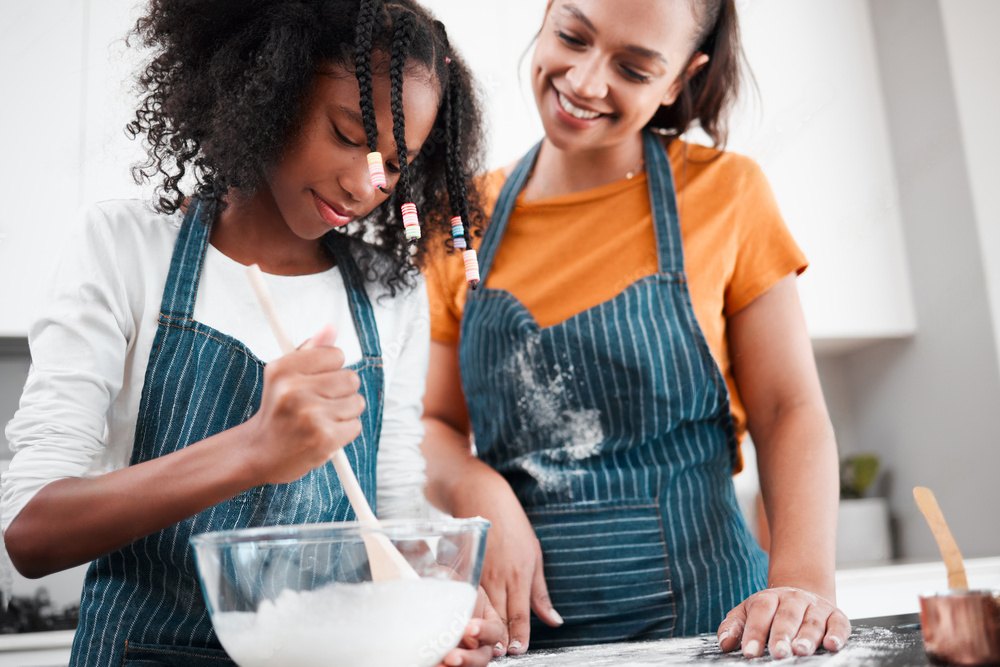
Ask a seven-year-old to double a cookie recipe and you have a fractions lesson they will actually sit through. There's a bowl in front of them, a measuring cup in their hand, and a real reason to get the answer right. Nobody wants salty cookies.
That's why so many homeschool families fold baking into the school week. Measuring is math. Watching dough rise is science. Reading a recipe from top to bottom is reading comprehension with a payoff at the end. The trick is matching the job to the child, because a three-year-old and a twelve-year-old need very different things from the same afternoon in the kitchen.
Here's how I'd break it down by age, along with the subjects each stage covers best.
Ages 2–4: Words, senses and cause and effect
At this age, baking is mostly touching, pouring and stirring. Toddlers won't follow a recipe, and they don't need to. Measure everything into small bowls before they climb onto the step stool, then hand over the jobs they can do: tipping ingredients into the mixing bowl, stirring batter with a wooden spoon, mashing a banana, pressing cookie cutters into dough, scattering sprinkles.
The lesson here is mostly language. Pour, stir, sprinkle, sticky, soft, warm. You're also teaching cause and effect (dry flour turns into dough once the milk goes in) and simple sequencing, like "first the flour, then the egg."
Good first projects are banana bread, cut-out sugar cookies and simple muffins. Adults handle the oven, hot liquids and anything sharp, every time.
Ages 5–7: Math they can hold in their hands
Children this age can follow simple steps, and they badly want to do things properly. Let them measure dry ingredients with cups and spoons, crack eggs (some shell will get in; fish it out and keep going), whisk, roll dough and spread frosting.
This is the sweet spot for early fractions. A recipe card has halves and quarters printed right on it, and a child holding a ½ cup next to a ¼ cup can see which one is bigger in a way a worksheet can't show. Ask questions as you go. How many quarter cups fill one whole cup? We need two eggs and we've cracked one, so how many are left?
Science starts here too. Why did the batter get taller in the oven? Where did the butter go?
Frosted cupcakes, scones, pancakes and fruit crumble all work well. Start oven awareness now: they watch you put pans in and take them out, from a step back.
Ages 8–12: Fractions, ratios and working on their own
Most kids in this range can read a recipe start to finish with a few check-ins. They can measure wet and dry ingredients accurately, use a hand mixer with supervision, set timers and start troubleshooting ("this looks too thick, should I add more milk?").
This is where baking turns into a real math lesson. Halving a recipe that calls for ¾ cup of sugar takes actual fraction work. Doubling one means scaling every single line. Getting two parts of a bake to finish at the same time is planning they'll use for years.
The science gets more interesting as well. Yeast feeds on sugar and makes the gas that lifts cinnamon roll dough. Cold butter makes flakier pastry than soft butter, and they can taste the difference.
Try cinnamon rolls, layer cakes, pie crust from scratch or homemade pasta. With supervision, this is also the age to teach proper knife skills. A sharp knife used correctly is safer than a dull one.
Ages 13 and up: Independence and real technique
Teens can plan a bake, write the shopping list, scale the recipe and work with very little supervision. That opens up the techniques that reward patience: laminated dough for croissants, tempered chocolate, macarons, sourdough over several days.
For a homeschooler, a multi-day project like sourdough or croissants doubles as a lesson in project management. Plenty of teens end up teaching their younger siblings, which teaches them twice.
Quick reference by age
- Ages 2–4: pour, stir, mash and press cutters. Best for vocabulary and cause and effect. Start with banana bread. Constant, hands-on supervision.
- Ages 5–7: measure, crack eggs, roll and spread. Best for early fractions and simple science. Start with cupcakes. Close supervision.
- Ages 8–12: follow a full recipe and use a mixer. Best for fractions, ratios and kitchen chemistry. Start with cinnamon rolls. Regular check-ins.
- Ages 13+: bake alone and try advanced technique. Best for project planning and food science. Start with croissants or sourdough. Available for questions.
Making it count as school
A few habits turn a baking session into a lesson without it feeling like one.
- Talk through what's happening. "The butter is turning pale because we're beating air into it" is a science lesson that takes five seconds.
- Have them read the recipe aloud before you start, then explain the steps back to you in their own words.
- Change the numbers on purpose. Ask for half a batch, or enough for the whole co-op.
- Take a photo of every finished bake. If you keep a homeschool portfolio, a photo plus one line about what they measured or figured out makes an easy record.
- Let the lopsided cookie stay lopsided. A child made it, and that's the whole idea.
Where Crumble Crate fits
Our kits are built for exactly this kind of afternoon. Each one comes with the dry ingredients already measured, the specialty tools (yours to keep), a printed recipe card and step-by-step video tutorials you open with a QR code. That means you spend the session teaching instead of shopping and measuring. You add the fresh items yourself, like eggs, butter and milk, and they're listed on the card so you can have them ready.
Crumble Crate is an approved TEFA vendor, so Texas families can use their program funds on our kits.
The kit Texas families pick most often is our Cookies & Cream Swiss Roll. Rolling a warm sponge without cracking it takes timing and a steady hand, so it works well for ages 8 and up, with younger siblings on frosting duty.
Want more detail on each age group, including an equipment list and answers to common safety questions? Read the full guide on our blog.
Paula, Founder of Crumble Crate